

Why the Future of the British Kitchen Is Handcrafted, Not Flat-Pack
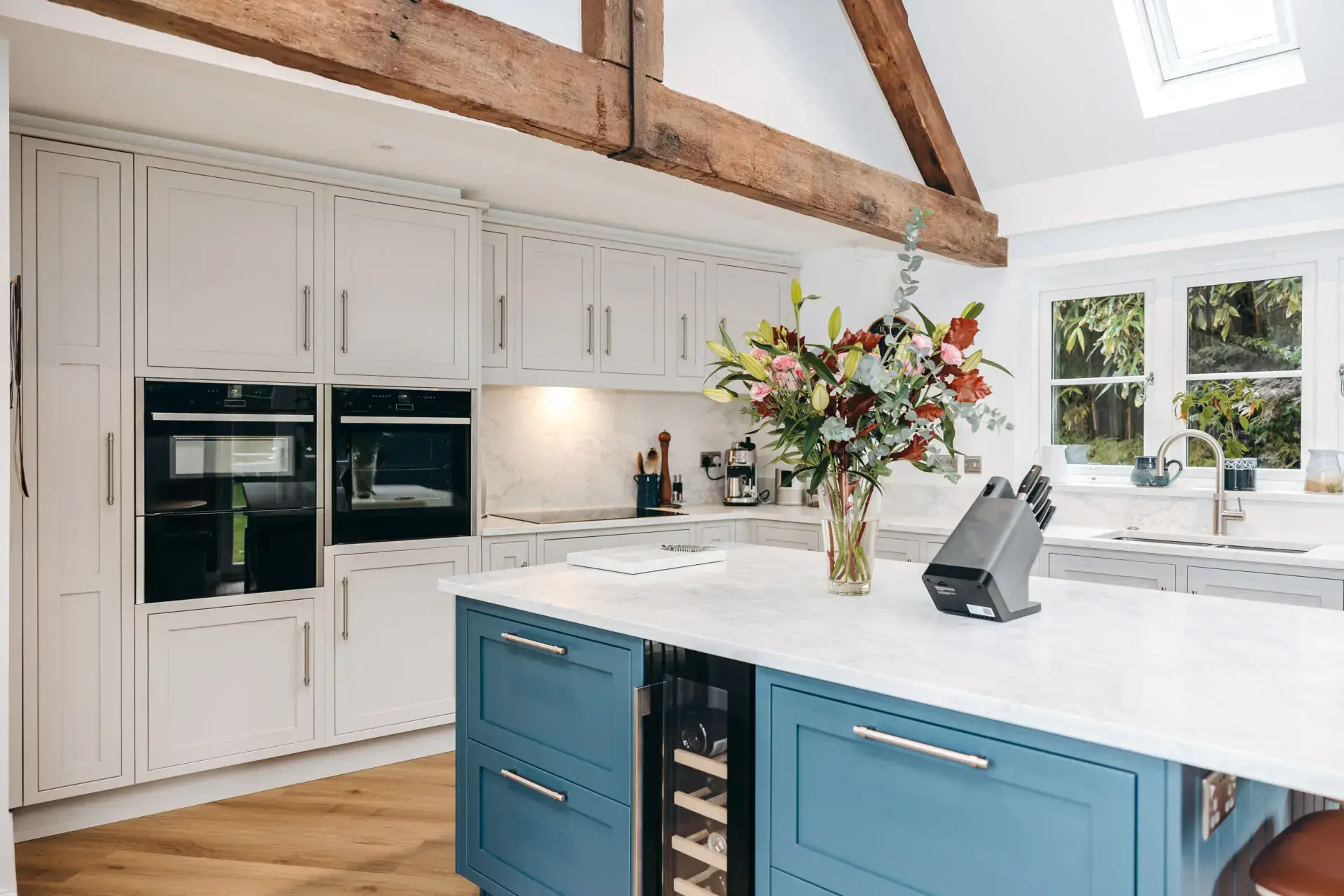
Walk into almost any British home and the kitchen tells a story.
Sometimes it is a good one: timber that has mellowed with age, doors that still hang true, a room that feels as if it has always belonged to the house. Too often, though, the story is more familiar: a ten-year-old kitchen already failing at the hinges, peeling foil doors, warped worktops and a layout that never quite worked in the first place.
At a time when kitchen projects can easily run into five-figure budgets and involve major disruption to the heart of the home, those stories matter.
If you are about to invest in a kitchen that is meant to last decades, not seasons, the real question is no longer “What’s in fashion?” It is “Who is making this, how, and from what?”
At Kenton Jones, that is where true value lies.
Kitchens have become once-in-a-generation decisions
The cost of a serious kitchen renovation has risen sharply in recent years. Many full kitchen renovations now comfortably exceed £20,000 and at the bespoke end of the market, it is increasingly common for high-quality, handcrafted kitchens to run well beyond £40,000 – for more complex schemes, including building work and premium appliances, to approach or exceed £100,000.
That level of investment changes the brief. A kitchen is no longer a quick cosmetic update before a sale; it is a once-in-a-generation decision about how you want to live.
Most of our clients are taking a long view. They are often:
- renovating period or character properties,
- building carefully detailed new homes, or
- adapting spaces for long-term, multi-generational living.
They are less interested in chasing the latest door profile and more concerned with whether the joinery will still feel right in twenty years’ time. They ask about provenance of timber, repairability and how the kitchen will sit within the architecture of the house.
In other words, they are looking beyond the catalogue.
The problem with disposable kitchens
The modern mass-market kitchen industry is built around speed and repeatability. Standard carcasses, fixed module sizes, imported components and aggressive discount cycles have made it possible to install a new kitchen quickly at a headline price.
The hidden cost is longevity.
Foil-wrapped doors and chipboard panels have limited tolerance for moisture and impact. Cabinetry designed around standard modules can compromise room proportions. When something fails, matching a finish five or ten years later can be difficult or impossible. The result is a room that looks tired long before the rest of the house does.
There is, of course, a place for ready-made kitchens. But for a growing group of homeowners, architects and designers, the equation has shifted. When the budget, the house and the expectations all point towards a long lifespan, a different approach is needed.
What “handcrafted” actually means in practice
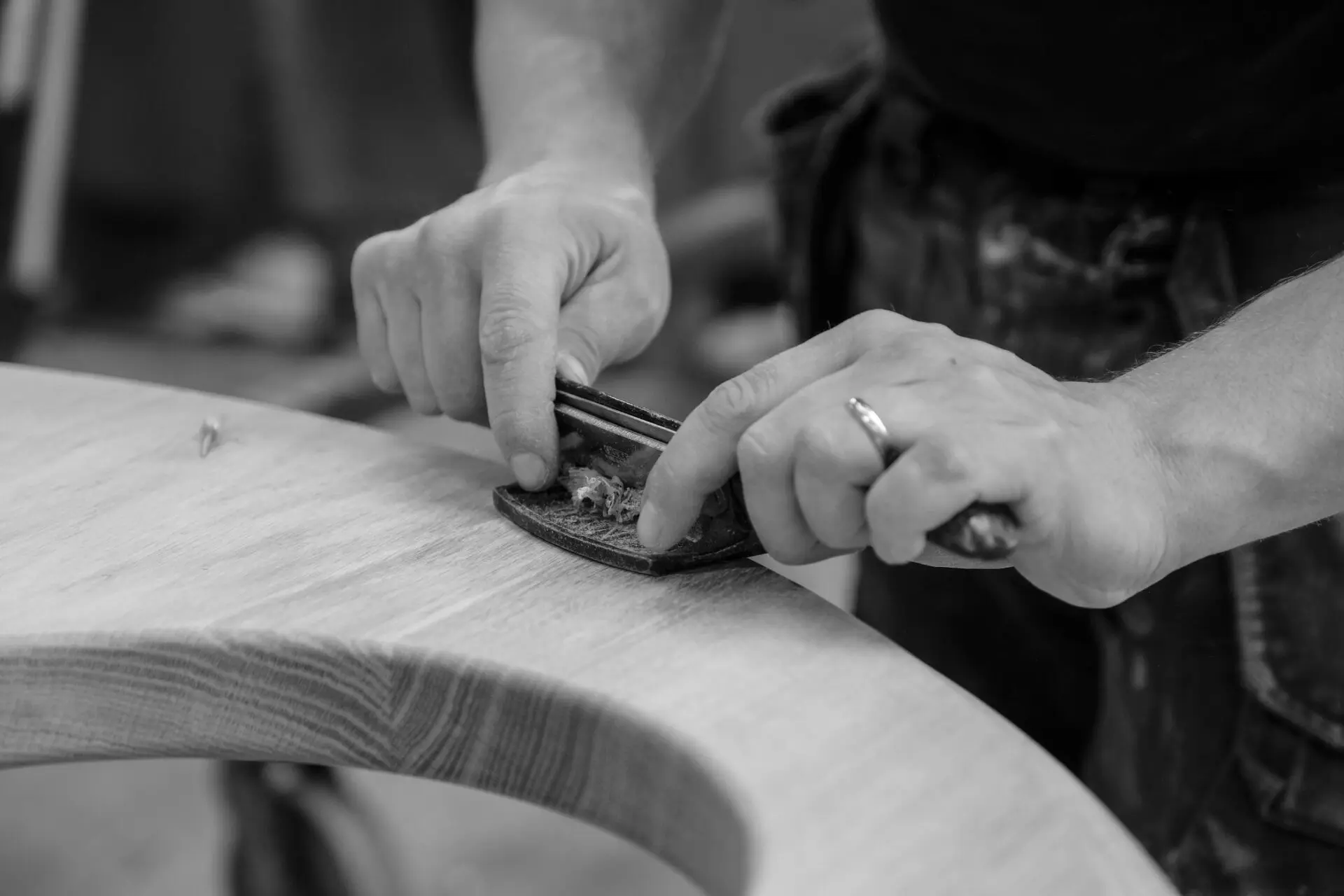
“Handcrafted” is one of the most over-used words in interiors. For us it has a very specific meaning.
At our Welshpool workshops, every kitchen begins as a blank page. Cabinets are built as in-frame furniture, not flat-pack boxes. Carcasses are sized to the room, not the other way round. Solid timber frames and properly jointed doors are hung and balanced in the workshop before they ever reach site.
Drawers are dovetailed. Finishes are hand-sanded and sprayed in-house. If a client prefers hand-painted, that is done in situ once the installation is complete and everything has settled.
This level of control changes three things:
1. Proportion
We can run cabinet lines to precise ceiling heights, line up stiles with window mullions and work sympathetically with slopes, beams and odd corners. The room feels calm because the joinery is in tune with the architecture.
2. Durability
A solid timber frame and properly detailed carcass can be adjusted, re-painted and repaired over time. Hinges and runners are chosen for service life, not just price. Clients notice this in the way doors close, drawers glide and shelves feel when they are loaded.
3. Continuity
Because everything is made by the same team, in the same place, we can revisit a project years later to add a dresser, re-configure an island or extend into a boot room with absolute confidence in the match.
Timber, provenance and the carbon question

There is another dimension to this conversation: the material itself.
Timber, when sourced and used responsibly, can offer significantly lower embodied carbon than many alternative materials. It also stores carbon in the fabric of the building over its lifespan. For a kitchen maker, that translates into some very practical decisions:
- choosing timber from well-managed forests,
- using it efficiently, and
- designing furniture that is intended to remain in place for decades, not end up in a skip after ten years.
At Kenton Jones we have been drying and working with timber in-house since the late 1970s. Long before sustainability became a policy document, it simply felt like the right way to work. Locally sourced oak and softwoods, carefully seasoned and handled, offer a warmth and depth that manufactured surfaces struggle to match.
When clients ask where a particular board has come from, we can often point to a nearby woodland rather than a factory thousands of miles away.
From one room to the whole home
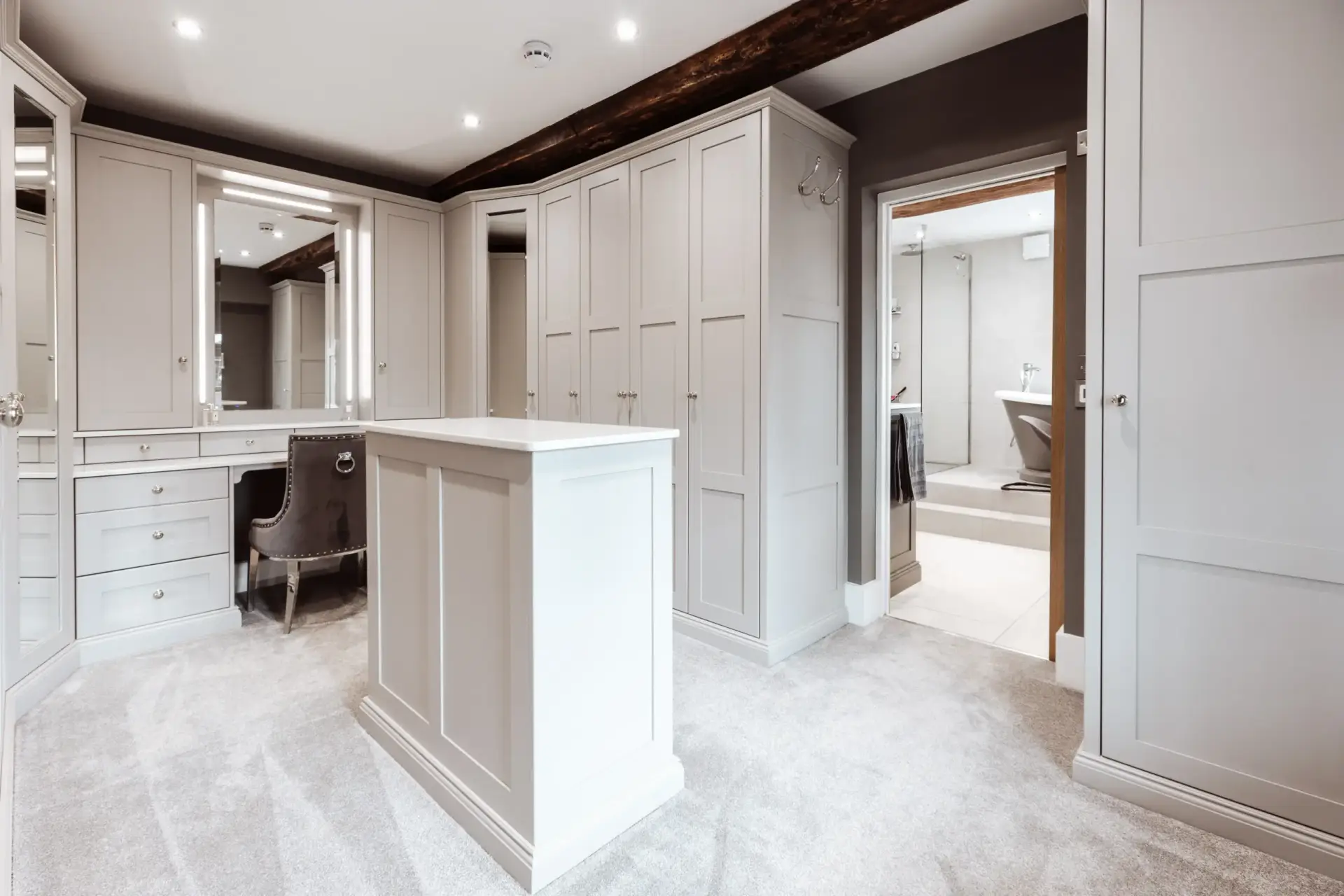
Once you view joinery as a permanent part of the building, it is a short step from kitchens to the rest of the house.
Over the years, many of our clients have returned to ask for pantries, utility rooms, boot rooms, dressing rooms and freestanding pieces that carry the same language as their kitchen. The result is a home that feels coherent: door profiles, proportions and materials quietly connect one space to another.
This whole-home approach eventually led us to an even larger canvas: the building itself.
Through our modular timber arm, Unnos Systems, we now design and manufacture complete volumetric modules in the same Welshpool facilities. The bones of the building and the interior joinery are considered together, built by the same team, from the same homegrown timber.
Recent projects have seen this work reach national television, from a family house in Southwater featured on Grand Designs to a remote island home on Build Your Dream Home in the Country. In each case the principle is the same: architecture-grade timber modules, carefully finished interiors and a controlled build programme that respects both the clients’ time and the landscape they are building in.
For kitchen clients, this background matters. It means the person designing their cabinetry thinks like a house designer as well as a furniture maker. Service runs, structure, light and circulation are not afterthoughts; they are part of the first conversation.
What to look for in a truly bespoke kitchen maker
Whether you work with us or another specialist, there are a few questions we encourage homeowners, architects and interior designers to ask when they are choosing a partner for a high-value kitchen or whole-home joinery project:
1. Who actually makes the furniture?
Whether you work with us or another specialist, there are a few questions we encourage homeowners, architects and interior designers to ask when they are choosing a partner for a high-value kitchen or whole-home joinery project:
2. How is the timber sourced and handled?
Ask about species, origin and drying. Good makers will talk readily about their supply chain and why they choose certain timbers for doors, frames and carcasses.
3. What does “bespoke” really mean here?
Are cabinet sizes dictated by a catalogue, or can they be tailored to your room and storage needs? Can you adjust heights, depths and internal layouts beyond standard options?
4. How is design joined up with installation?
The most carefully drawn plan will fail if installation is rushed or subcontracted without proper oversight. Look for makers who use their own fitting teams and are comfortable coordinating with other trades.
5. Can they show you projects that have aged?
New kitchens almost always look good in photographs. The real test is how they stand up after ten or fifteen years of daily use. Long-standing firms should be able to show you projects with a bit of patina.
These questions cut through marketing language and get to the heart of craft, process and longevity.
Quiet luxury in practice
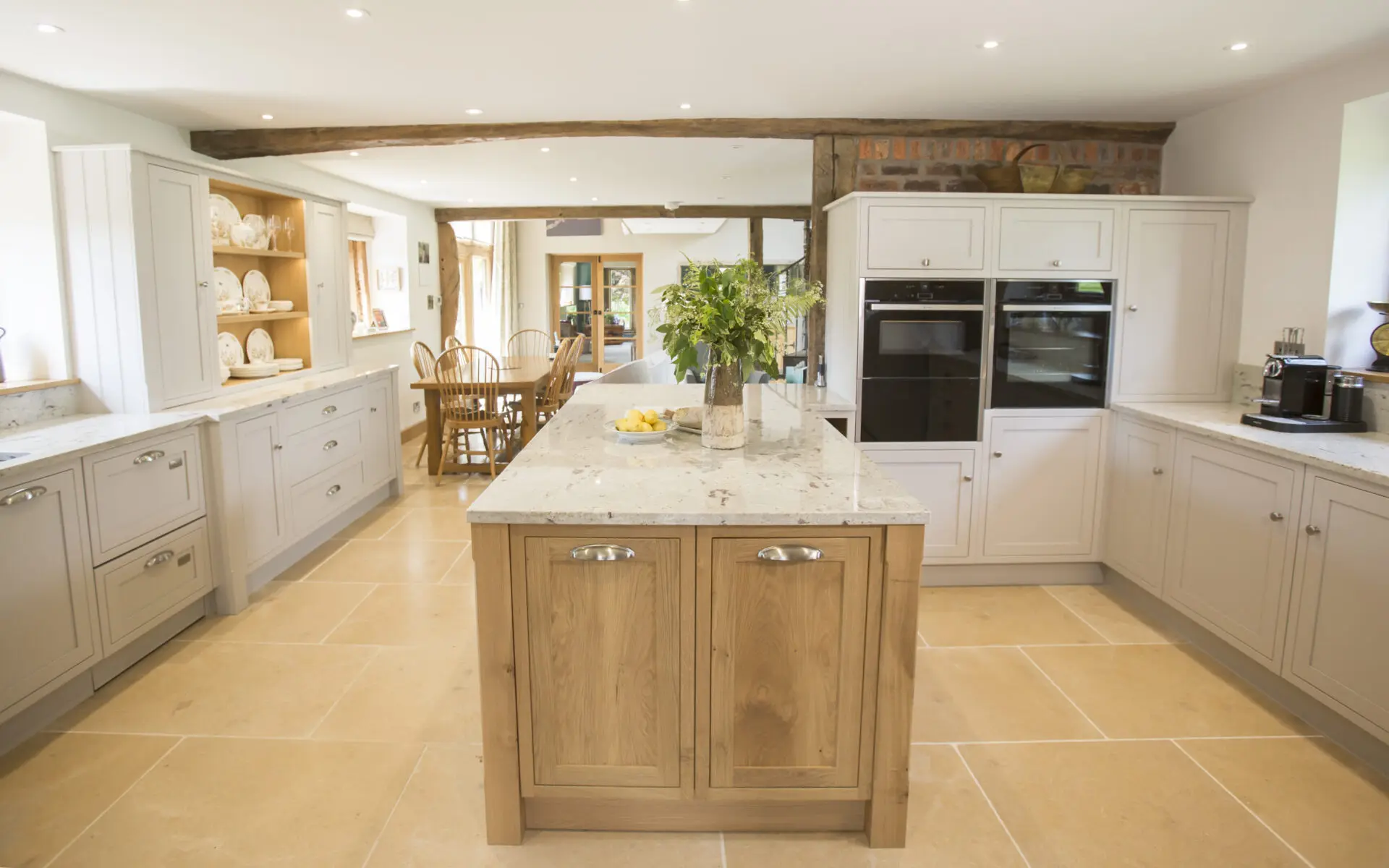
The phrase “quiet luxury” has been widely used in recent years, but in the context of kitchens and timber interiors it still holds meaning when you strip it back.
For us, it is not about an endless list of features. It is about:
- getting the fundamentals of layout and workflow right so that the room supports daily life effortlessly;
- choosing materials that age gracefully rather than loudly; and
- allowing craftsmanship to reveal itself slowly in the details – the radius of a frame, the feel of a handle, the sound of a well-hung door closing.
It is also about restraint. A handcrafted kitchen does not need to shout to justify itself. When the proportions are true and the joinery is honest, the room does the talking.
Looking ahead: kitchens designed for the next generation
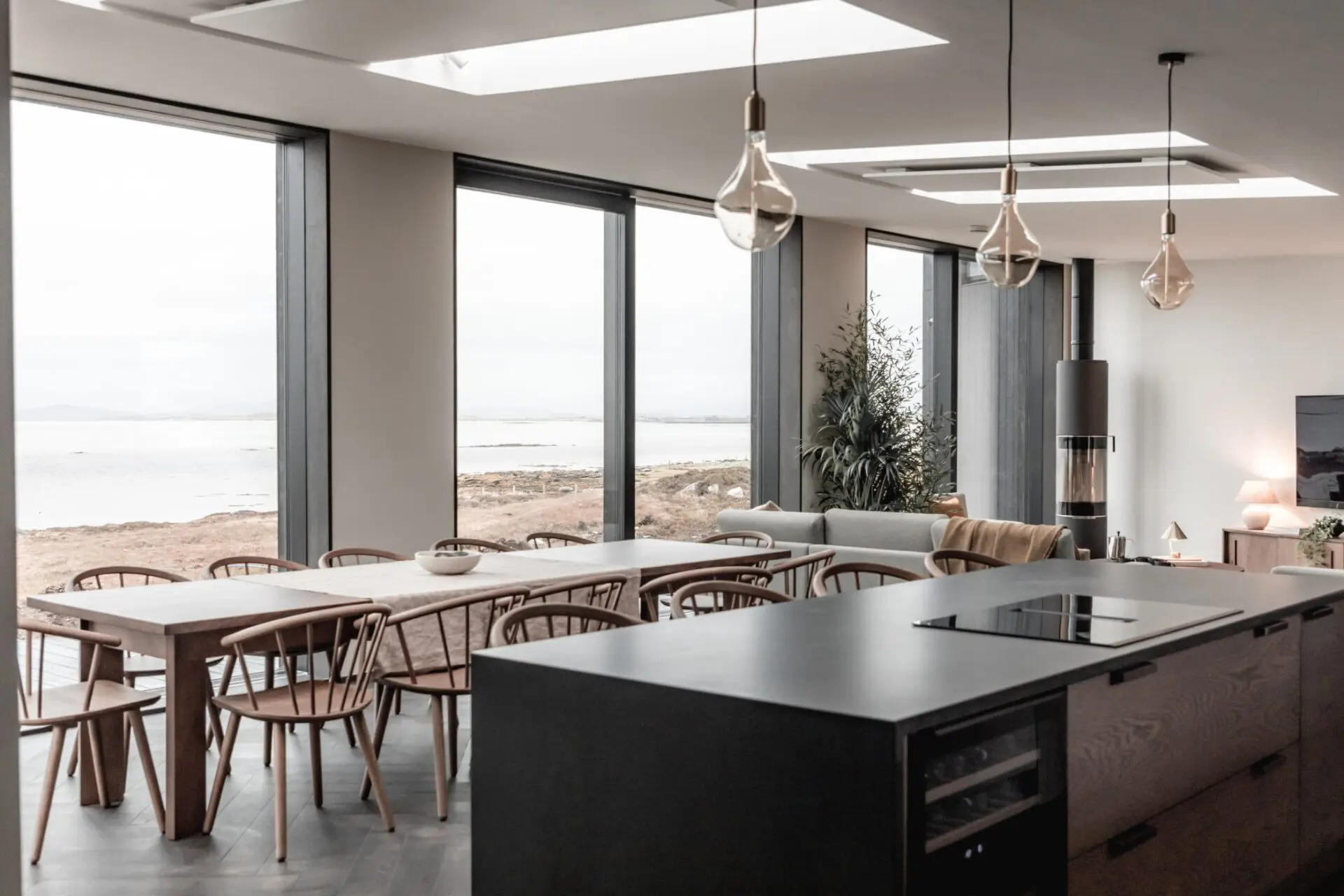
Kitchens remain one of the most significant projects in any home, both in terms of day-to-day living and long-term value. Against that backdrop, we believe the next decade will belong to kitchens and homes that combine three qualities:
1. Craftsmanship you can touch
Joinery that is built to be opened, leaned on and lived with, not just photographed on day one.
2. Timber with a story
Materials chosen for their environmental sense as well as their beauty, with a clear line back to well-managed forests and a long life in the building
5. Design that respects the house and the people in it
Spaces that feel considered, coherent and calm – equally suited to family breakfasts, quiet evenings and everything in between.
At Kenton Jones, this is the work that has occupied us since 1977. From a royal commission at Highgrove House in the early 2000s to more recent appearances on Grand Designs and Build Your Dream Home in the Country, the thread is the same: carefully made timber interiors that feel as if they belong.
If you are planning a kitchen or a home that is meant to last, it is worth looking past the catalogue and towards the workshop – whoever’s name is above the door. That is where the real decisions are being made.
FAQs: Handcrafted Luxury Kitchens
What makes a handcrafted kitchen different from a standard fitted kitchen?
A handcrafted kitchen is designed and built from a blank page for a specific room and client. Cabinets are sized to the space, not to a fixed grid, and are usually built as in-frame furniture from solid timber with traditional joints. Standard fitted kitchens often rely on modular carcasses, imported components and finishes that are harder to repair or refresh over time.
Are handcrafted kitchens worth the higher investment?
For many homeowners, the answer is yes. A well-made bespoke kitchen is designed to last for decades, with durable materials, repairable finishes and thoughtful layouts that support daily life. When you factor in lifespan, flexibility and the way a carefully made kitchen can enhance a home, the long-term value can be significantly higher than a disposable alternative.
How long does it take to design and install a bespoke kitchen?
Timelines vary depending on the complexity of the project, building work and appliance lead times. As a guide, detailed design and planning often take several weeks, with manufacturing and finishing in the workshop taking a number of weeks after that. Installation on site is usually measured in days rather than months, particularly when most of the work has been completed under controlled conditions in the workshop.
What materials are best for a long-lasting kitchen?
We favour solid and veneered timbers, high-quality sheet materials, robust hardware and worktops chosen to suit the way the client lives. Oak, ash and other hardwoods are common choices for doors and frames, with painted finishes offering flexibility over time. The key is to specify materials that can be maintained and renewed rather than replaced when fashions change.
Can a handcrafted kitchen work in a contemporary home, or is it only for period properties?
Handcrafted does not have to mean traditional. Many of our projects are contemporary in form, with clean lines, handleless cabinetry and a restrained palette. The common thread is not the style but the way the furniture is designed and built: tailored to the architecture and made to last, whether the house is a Georgian rectory or a modern timber frame.